
Miami Property Management Rentals That Reduce Owner Work

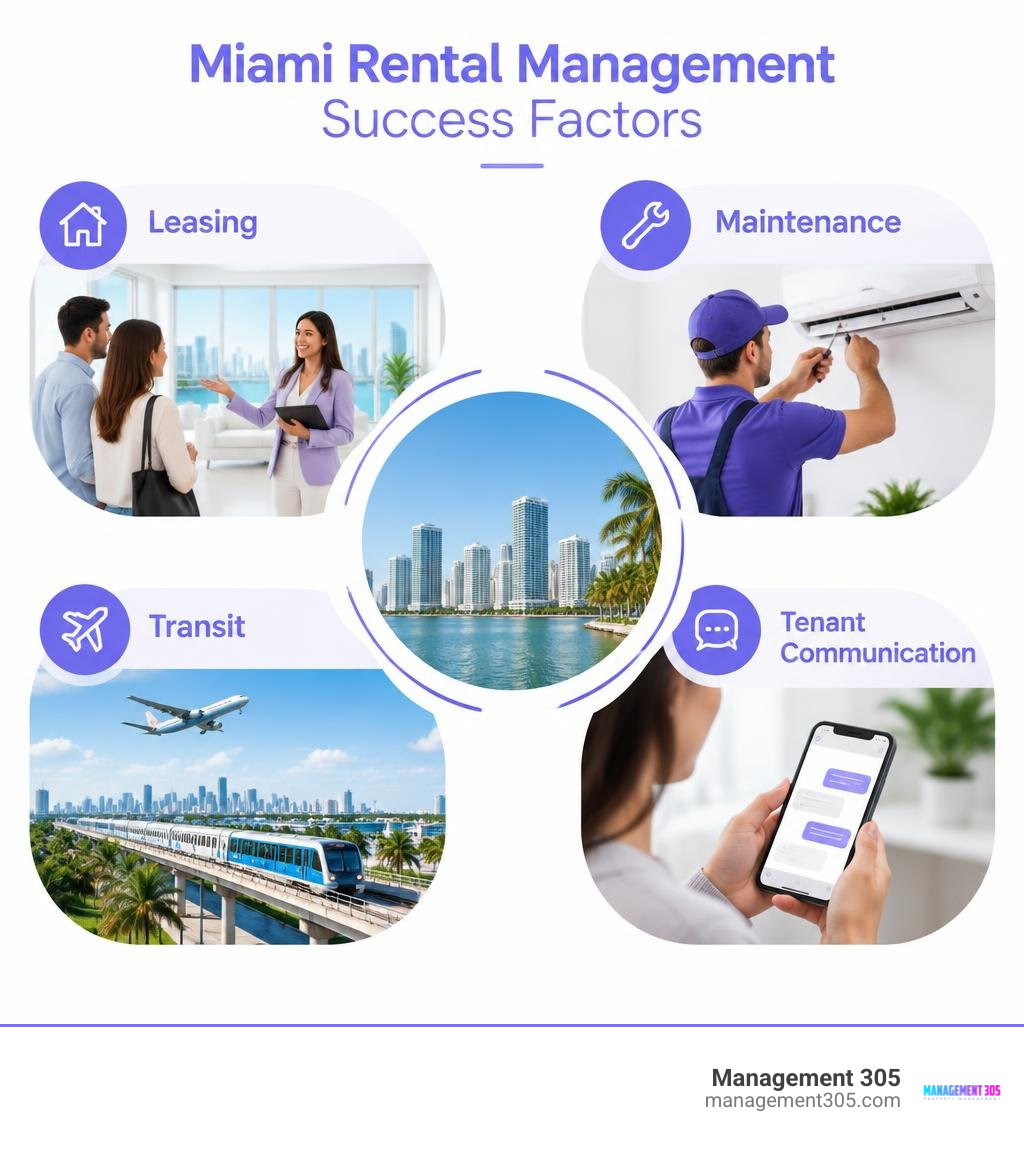
The best Miami property management rentals combine fast leasing, clear tenant screening, routine maintenance, and real-time owner updates. For a busy owner, the goal is simple: hire a local manager who can protect the property, control repair costs, respond to tenants quickly, and keep vacancy days low.
Miami also has a travel-driven rental market. Access to Miami International Airport, Fort Lauderdale-Hollywood International Airport, major highways, and transit can make a property more appealing to corporate renters, frequent travelers, and relocating tenants. But convenience has tradeoffs, especially near flight paths, where noise, parking, and building soundproofing can affect rent prices and renewals.
I am Cédric Rose, Founder and Property Manager at Management 305, with more than 14 years of experience overseeing renovations, community associations, and hundreds of Miami property management rentals. In this guide, I will break down the factors that help owners create a smoother, more profitable rental operation.
Major Transit Gateways Powering Miami Property Management Rentals

South Florida’s rental economy is uniquely tied to travel, international commerce, and relocation. For landlords and property investors across Miami, Sunny Isles Beach, Aventura, and Fort Lauderdale, understanding how tenants navigate these transportation arteries is essential. Whether accommodating corporate executives on long-term assignments, airline personnel, or hybrid professionals who fly weekly, property accessibility directly dictates occupancy and retention.
The region relies on a network of commercial international hubs, regional airfields, and maritime ports that channel high-earning tenants into residential neighborhoods. Miami International Airport and Fort Lauderdale-Hollywood International Airport serve as the primary commercial gateways, while executive airfields and the Port of Miami add further layers of rental demand.
| Airport / Hub | Primary Focus | User Rating Overview | Key Geographic Advantage for Renters |
|---|---|---|---|
| Miami International Airport (MIA) | Global & Domestic Commercial | 2.5 / 5 (3,400+ Yelp reviews) | Immediate access to Blue Lagoon, Downtown Miami, and Coral Gables |
| Fort Lauderdale-Hollywood Int'l (FLL) | Domestic & Low-Cost Commercial | 2.9 / 5 (2,700+ Yelp reviews) | Convenient for Dania Beach, Hollywood, and Aventura rentals |
| Miami-Opa locka Executive (OPF) | Private Aviation & Corporate Jets | High satisfaction / Private FBOs | Minutes from North Miami Beach and Golden Beach executive homes |
| Miami Executive Airport (TMB) | Business Aviation & Flight Training | 3.5 / 5 (4 Yelp reviews) | Direct access to Kendall and South Miami residential communities |
| North Perry Airport (HWO) | General Aviation & Charter | 4.1 / 5 (7 Yelp reviews) | Centrally positioned for Broward County suburban single-family homes |
| Homestead General Aviation (X51) | General Aviation & Agricultural | 4.0 / 5 (1 Yelp review) | Southern gateway serving South Dade and Florida Keys commuters |
| Port of Miami (Cruise Terminal C) | Maritime Transit & Cruise Tourism | 3.8 / 5 (18 Yelp reviews) | Walking distance or quick transit to Downtown and Brickell residences |
Miami International Airport (MIA) vs. Fort Lauderdale-Hollywood (FLL)
When managing residential properties across Miami-Dade and Broward counties, we frequently observe distinct tenant profiles clustering around our two primary commercial gateways: Miami International Airport (MIA) and Fort Lauderdale-Hollywood International Airport (FLL).
MIA functions as the central global nexus. Situated just west of Downtown Miami, it handles massive international and domestic passenger volumes. However, high traffic density can lead to logistical friction. MIA holds an average rating of 2.5 stars across more than 3,400 Yelp reviews. Specific areas face sharper scrutiny from regular travelers; for example, Concourse D averages a 2.8-star rating across 130 reviews, while TSA Checkpoint D holds a 1.6-star rating across 29 reviews. Long security lines, terminal congestion, and baggage handling delays are common pain points. For tenants who travel frequently, living within a 15-minute rideshare or Metrorail trip helps cushion these disruptions.
By comparison, FLL serves as a popular alternative for domestic travel and low-cost carriers, earning a 2.9-star rating across over 2,700 Yelp reviews. Tenants living in northern Miami-Dade and southern Broward—including Hollywood, Dania Beach, and Aventura—often prefer FLL for its relatively straightforward terminal layout and rapid access to Interstate 95 and Interstate 595.
Balancing these transit dynamics requires hands-on oversight. We help property owners target the right tenant demographics and set competitive lease terms through our comprehensive leasing and management services, ensuring your units stay occupied year-round.
Executive and General Aviation Hubs in South Florida
High-net-worth tenants, corporate executives, and private flight crews frequently prioritize proximity to general aviation airports over commercial terminals. South Florida offers several premier facilities that support this sector:
- Miami-Opa locka Executive Airport (OPF): Located just north of Miami, Opa-locka is the premier choice for private jet charters, corporate aviation, and executive flight operations. Rental properties in nearby Aventura, North Miami Beach, and Golden Beach regularly attract executive tenants who value fast, private fixed-base operator (FBO) access.
- Miami Executive Airport (TMB): Positioned in West Kendall, TMB holds a 3.5-star rating across Yelp reviews and serves as a major reliever for general aviation. It provides direct access to Kendall, Pinecrest, and South Miami residential communities.
- North Perry Airport (HWO): Centrally located in Pembroke Pines near Hollywood and Dania Beach, North Perry earns a 4.1-star rating based on 7 reviews and supports corporate charters Emperor and light aircraft operations.
- Homestead General Aviation (X51): Serving the southern end of Miami-Dade County, Homestead General holds a 4.0-star rating based on Yelp feedback and offers efficient general aviation services away from congested urban airspace.
Properties near these executive hubs appeal strongly to high-income corporate renters who prioritize fast regional transit, private hangar facilities, and reduced terminal wait times.
High-Demand Neighborhoods Balancing Transit Access and Tenant Quality

Location selection dictates rental yields, vacancy intervals, and the caliber of applicants submitting background checks. Selecting an investment location requires balancing rapid airport and highway connectivity with high neighborhood livability.
Maritime hubs also influence urban rental velocity. For example, Cruise Terminal C at the Port of Miami holds a 3.8-star rating across 18 reviews, reflecting streamlined operations that bring thousands of maritime professionals, cruise executives, and seasonal workers into the Downtown Miami and Brickell housing markets.
Optimizing Miami Property Management Rentals for Airport Proximity
To maximize rental revenue, landlords must understand which neighborhoods best serve frequent travelers and corporate clients:
- Blue Lagoon / Airport West: Positioned directly south and west of MIA, this corridor is packed with corporate business parks, regional corporate headquarters, and water-facing condominium complexes. It is an ideal target for flight crews, corporate relocations, and medical professionals.
- Downtown Miami & Brickell: Offering direct access to MIA via the Metrorail Orange Line and minutes from the Port of Miami, these urban cores attract young professionals, finance executives, and tech workers who demand rapid transit alongside nightlife and dining.
- Coral Gables: Situated just 10 to 15 minutes south of MIA, Coral Gables offers historic charm, premier shopping, and strict zoning laws. It appeals to corporate directors and international executives who want a quiet residential setting with short commute times.
- Aventura & Sunny Isles Beach: Positioned midway between MIA and FLL, these coastal enclaves attract international renters and executive tenants who split travel between both airports while enjoying luxury high-rise amenities.
- Hollywood & Dania Beach: Bordering FLL, these expanding markets provide single-family and multifamily rentals popular with logistics managers, marine industry specialists, and airline personnel.
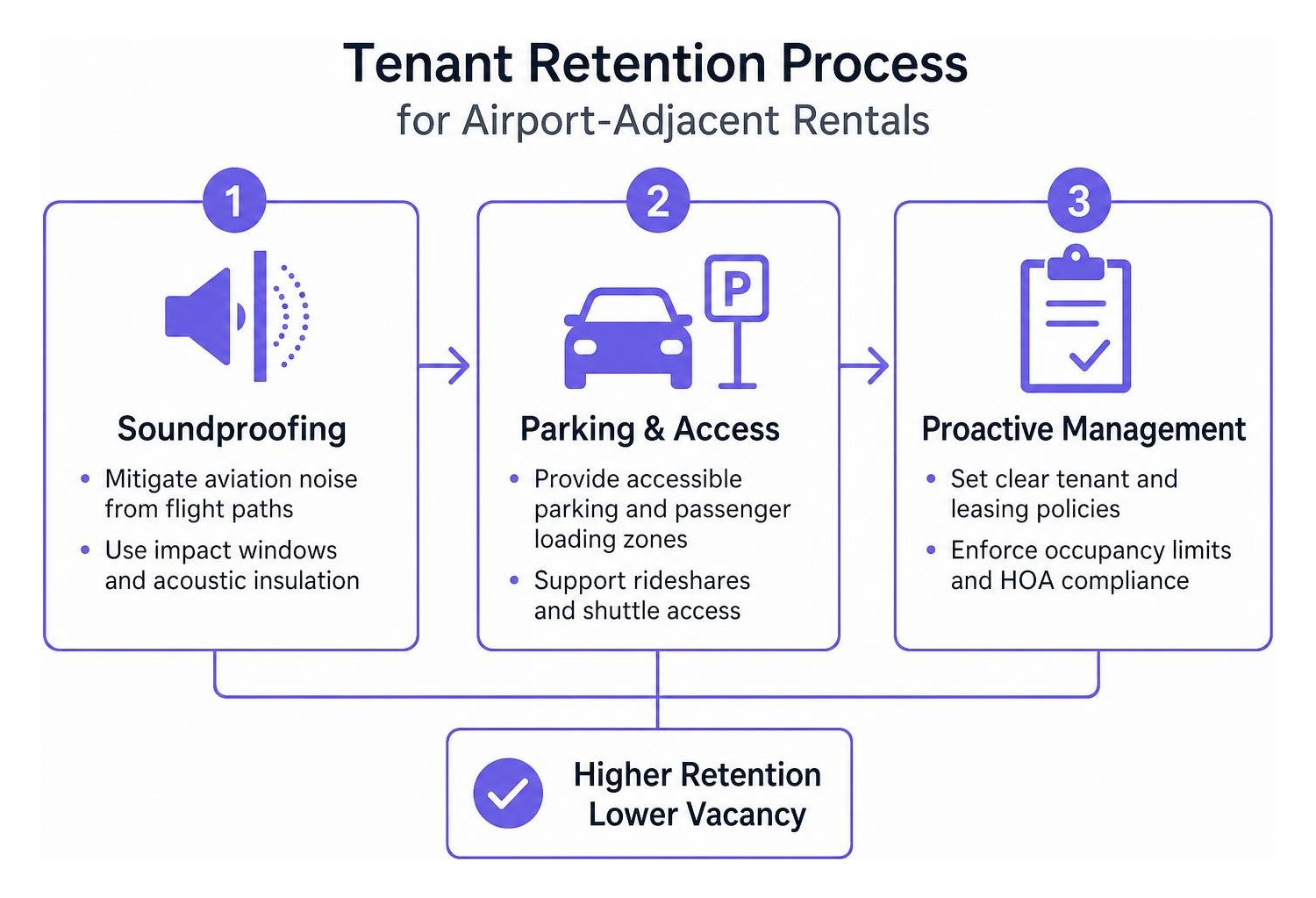
Protecting your investments across these diverse markets requires clear leasing parameters. We establish structured tenant criteria, occupancy limits, and HOA compliance guidelines by applying clear tenant and leasing policies across every unit we oversee.
Transportation Infrastructure: Shuttles, Brightline, and Rideshares
South Florida’s multi-modal transit network shapes how tenants travel between residential properties and transportation centers:
- Brightline High-Speed Rail: Connecting Downtown Miami, Aventura, Fort Lauderdale, and beyond, Brightline has transformed regional commuting, making high-end rentals near its stations highly competitive.
- Miami Metrorail Orange Line: Provides direct, traffic-free rail transit from Downtown, Brickell, and Coconut Grove straight into the MIA Airport Station.
- Rideshares and Dedicated Shuttles: Rideshare availability across Miami, Dania Beach, and Hollywood makes car-optional living viable for corporate tenants, provided rental properties feature accessible passenger loading zones.
- Major Arterials: Rapid access to the Dolphin Expressway (SR 836), Palmetto Expressway (SR 826), and I-95 remains a top listing feature for rental listings.
Crucial Amenities and Considerations for Airport-Adjacent Properties
Managing rentals near major transit corridors requires balancing convenient accessibility against environmental factors. Properties that incorporate protective building amenities enjoy higher lease renewal rates and lower vacancy.
How Noise and Transit Shape Miami Property Management Rentals
Aviation noise can impact tenant comfort if a property sits directly below primary approach or departure corridors. Jet engine noise and low-altitude flight paths can increase turnover if prospective renters feel unexpected acoustic disruption.
Effective physical mitigation strategies include:
- Impact-Resistant, Double-Pane Windows: Standard across newer South Florida construction for hurricane safety, heavy laminated impact glass also delivers superior sound attenuation, reducing external aircraft noise by up to 80%.
- Solid-Core Exterior and Interior Doors: Upgrading from hollow-core doors dampens hallway and street-level noise.
- Acoustic Insulation: Dense insulation in attic spaces and exterior walls blocks high-frequency jet engine sounds.
When managing properties within multi-family communities or condominium towers, aligning building operations with resident comfort is essential. We manage these complex operational standards through our specialized community association management services, keeping shared facilities pristine and enforcing building noise regulations.
Parking, Security, and Cleanliness Standards
Tenants living near transit hubs expect building amenities that match their on-the-go routines:
- Assigned, Secure Parking: In dense neighborhoods like Downtown Miami, Brickell, and Hollywood Beach, reserved garage parking is a non-negotiable leasing feature for high-quality applicants.
- Access Control and Surveillance: Keyless smart locks, mobile gate access, and monitored security systems provide peace of mind for tenants who travel frequently and leave their homes unoccupied for days.
- Luggage Drop-Off and Storage: Convenient elevator access, wide entryways, and secure parcel lockers cater directly to traveling professionals.
- Electric Vehicle (EV) Charging: Adding Level 2 EV charging stations increases rental appeal and supports premium monthly rates.
Maintaining these systems requires dedicated, boots-on-the-ground support. At Management 305, our experienced local management professionals perform routine site inspections, coordinate prompt preventative maintenance, and preserve property value.
Frequently Asked Questions About Miami Rental Management
Which airports offer the best connectivity for Miami rental tenants?
Miami International Airport (MIA) offers the broadest global and domestic connectivity, making it the top choice for international business travelers and corporate tenants located in Miami, Coral Gables, and Downtown. Fort Lauderdale-Hollywood International Airport (FLL) provides exceptional domestic connectivity with budget-friendly carriers, serving tenants residing in Aventura, Sunny Isles Beach, Hollywood, and Dania Beach.
How does airport flight-path noise impact rental property demand?
Unmitigated flight noise can lead to tenant dissatisfaction and elevated turnover rates. However, properties fitted with hurricane-rated impact windows, solid-core doors, and quality insulation eliminate most external sound. When properly soundproofed, transit-adjacent properties command strong market rents due to their unmatched location convenience.
What transit features attract executive tenants to South Florida rentals?
Executive renters look for properties offering secure, covered parking, fast access to private aviation hubs like Miami-Opa locka Executive Airport (OPF), keyless entry systems, proximity to Brightline stations, and quiet, well-insulated home workspaces.
Conclusion
Maximizing rental performance in South Florida's competitive real estate market requires local expertise, structured operations, and responsive tenant care. By understanding how transit hubs like MIA, FLL, and regional executive airports drive tenant movement, landlords can optimize their rental offerings, minimize vacancies, and attract reliable, high-earning occupants.
At Management 305, we lift the burden of day-to-day landlording off your shoulders through proactive maintenance, automated owner reporting, rigorous tenant vetting, and transparent communication. Protect your rental assets and maximize your net operating income by partnering with our team for professional full-service property management.
