
Why HOAs Look for Certified Community Association Managers

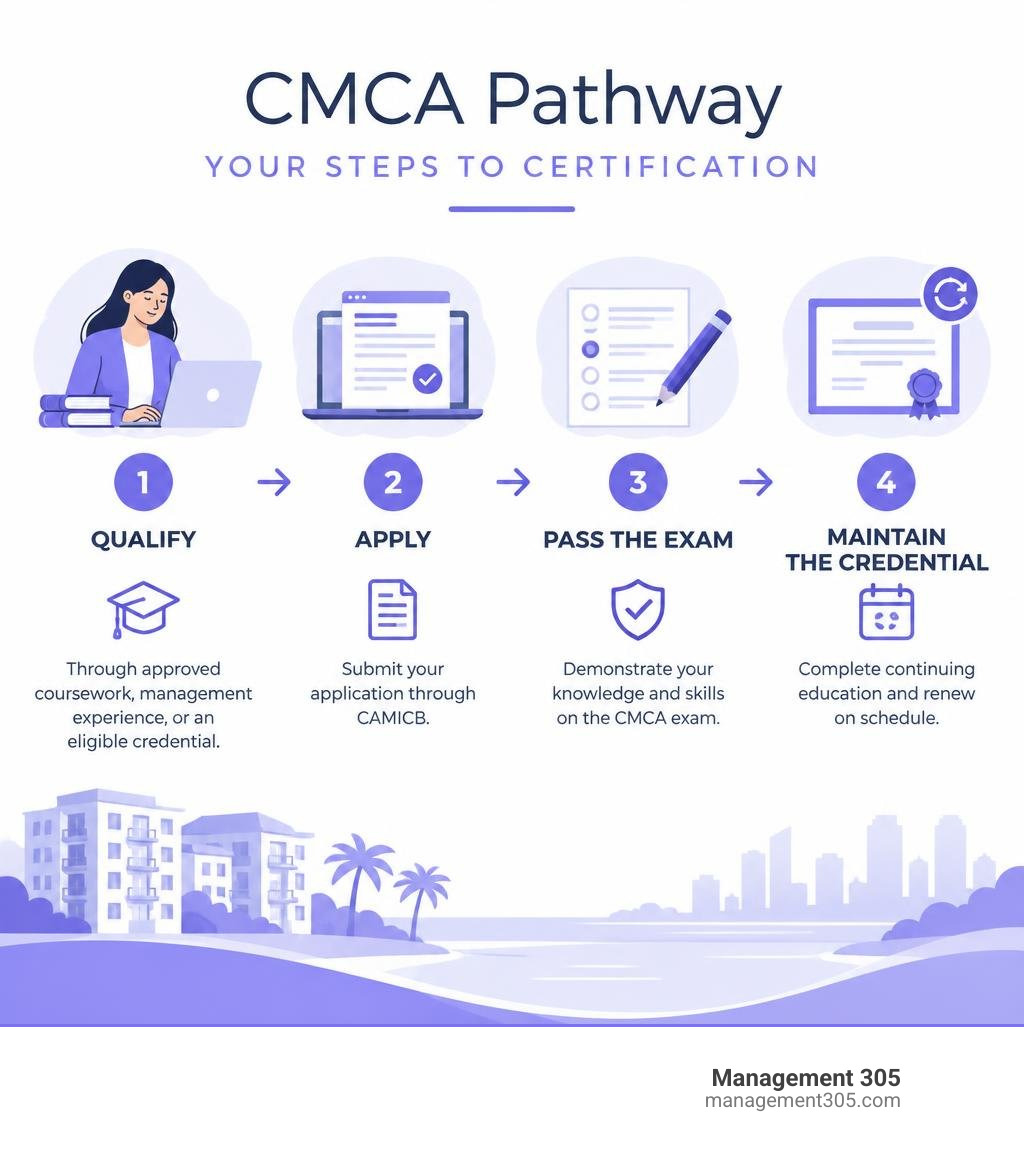
To become a Certified Manager of Community Associations (CMCA), qualify through approved coursework, management experience, or an eligible credential. Then apply through CAMICB and pass the CMCA exam. To keep the certification, complete continuing education and renew it on schedule.
For an HOA board, the credential shows that a manager has been tested on core work such as budgets, governance, maintenance, and risk. It is a useful starting point, but boards should still ask about the manager's experience with communities like their own.
I'm Cédric Rose, founder and property manager at Management 305, with over 14 years of experience in residential property and community association management across South Florida. My work overseeing hundreds of units has shown me why the certified manager of community associations credential matters alongside clear reporting, sound judgment, and dependable care.
Managing modern residential communities is serious business. Today, an estimated 80 million residents live in nearly 373,000 community associations across the United States. In dynamic markets like Miami, Sunny Isles Beach, and Fort Lauderdale, residential boards oversee multi-million-dollar operating budgets and complex physical structures.
Fiduciary duty requires residential boards to partner with knowledgeable professionals who understand the operational nuances of homeowner and condominium associations. That is why over 90% of community association board members prefer hiring credentialed management professionals.
What Is a Certified Manager of Community Associations (CMCA)?
The Certified Manager of Community Associations (CMCA) is an internationally recognized credential that validates baseline competence, practical skill, and ethical conduct in community management. Administered by the Community Association Managers International Certification Board (CAMICB), the program is the only accredited certification program in the world for managers of homeowner and condominium associations.
CAMICB holds dual accreditation from the National Commission for Certifying Agencies (NCCA) and ANSI/ISO/IEC 17024—a benchmark achieved by only a select group of credentialing bodies globally. To date, CAMICB has certified over 25,000 managers worldwide.
For residential boards and homeowners, the credential provides immediate peace of mind. It signifies that your manager adheres to strict professional standards, understands complex statutory frameworks, and possesses the practical competence needed to protect your community's long-term property values. When boards invest in dedicated CAM community association management, verified credentials ensure your association operates smoothly from day one.
Core Responsibilities of a Certified Manager of Community Associations
A credentialed manager balances administrative rigor, financial accuracy, and resident communication. Core operational duties include:
- Budgeting & Financial Controls: Preparing annual operating budgets, balancing financial statements, monitoring delinquency rates, and ensuring timely assessment collection.
- Reserve Fund Oversight: Coordinating statutory reserve studies, monitoring capital replacement funds, and funding long-term mechanical, roofing, and structural repairs.
- Vendor & Contract Administration: Drafting competitive scopes of work, evaluating service bids, supervising on-site contractors, and verifying proper vendor licensing and insurance.
- Governing Document Enforcement: Enforcing Covenants, Conditions, and Restrictions (CC&Rs), community bylaws, and architectural review guidelines consistently and fairly.
- Preventative Property Maintenance: Implementing recurring maintenance schedules for roofs, swimming pools, elevators, fire-safety systems, and access control hardware.
- Board Meeting Governance: Organizing notice distribution, drafting agendas, running parliamentary procedures, tracking quorums, and recording official minutes.
Eligibility and Prerequisites for the CMCA Exam
Before sitting for the proctored examination, candidates must prove their foundational knowledge through one of three distinct eligibility pathways established by CAMICB.

| Eligibility Pathway | Primary Requirement | Best Suited For |
|---|---|---|
| Education Pathway | Complete an approved foundational course (e.g., CAI M-100: The Essentials of Community Association Management) | New managers entering the residential management profession |
| Experience Waiver Pathway | Document 2+ years (approx. 4,000 hours) of direct community management experience | Practicing managers who have navigated full annual association cycles |
| State License Pathway | Hold an active, qualifying state CAM license (e.g., Florida CAM, California CCAM) | Licensed professionals seeking national and international recognition |
According to the official CMCA Prerequisites 2026: How to Qualify for the Exam guidance, CAMICB reviews all applications to ensure candidates meet these rigorous standards before issuing test authorization.
Qualifying Pathways: Coursework, Experience, and State Licenses
- Foundational Education: The most common starting point for newcomers is completing the CAI M-100 course. This intensive curriculum covers the core principles of community operations, risk management, and governance.
- Field Experience Waiver: Working managers with at least two years (4,000 hours) of documented, hands-on experience can waive the preliminary course requirement. Two full operational cycles expose managers to budgeting, annual meetings, and statutory audits.
- Qualifying State Licenses: In regulated jurisdictions like Florida, earning a state-issued Community Association Manager (CAM) license fulfills the CMCA prerequisite automatically. Managers leveraging their local licensing can fast-track national certification, pairing state legal proficiency with broad property management standards.
How to Become a Certified Manager of Community Associations
Once you confirm your prerequisite pathway, completing the certification follows a structured process:
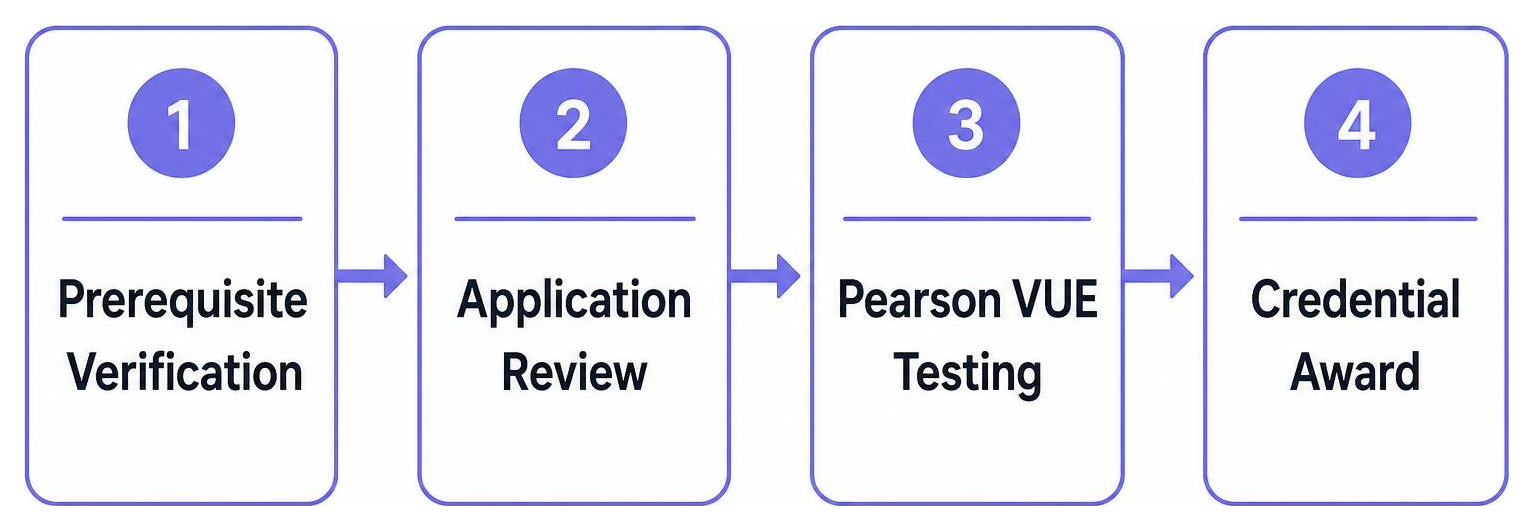
- Submit Application: Complete your application through the CAMICB portal and pay the initial application and testing fee.
- Receive Authorization: Upon review and approval of your prerequisites, CAMICB issues an eligibility notice valid for one full calendar year.
- Schedule the Exam: Register through Pearson VUE to test at an authorized testing center or via secure remote proctoring through the CMCA EXAMINATION – CAMICB system.
- Complete the Assessment: Sit for the 2.5-hour computer-based test comprising 120 multiple-choice questions (100 scored items and 20 unscored pilot questions).
- Instant Results: Candidates receive their score results immediately at the conclusion of the test session.
CMCA Exam Structure, Knowledge Domains, and Recertification
The examination content is derived from extensive job analysis studies conducted in alignment with the Standards for Educational and Psychological Testing. Effective from the recent content revisions outlined in the official STUDY GUIDE , the test evaluates candidates across six core operational domains:

- Governance and Legal Compliance (23%): Interpreting declaration bylaws, understanding state and local statutes, applying parliamentary procedures, and managing records.
- Financial Management (21%): Structuring annual budgets, interpreting balance sheets, tracking general ledger accounts, managing replacement reserves, and executing assessment collections.
- Meetings and Events (18%): Facilitating annual owner meetings, board voting protocols, proxy validation, notice periods, and dispute resolution.
- Risk Management and Insurance (14%): Evaluating comprehensive general liability, property casualty, D&O policies, and safety protocols.
- Property Maintenance (14%): Coordinating preventative maintenance routines, structural integrity audits, and emergency repairs.
- Contracting (10%): Drafting bid specifications, negotiating vendor agreements, evaluating project warranties, and verifying lien waivers.
Continuing Education and Credential Maintenance
Earning the CMCA credential is the beginning of a lifelong commitment to professional development. To maintain active certification status, managers must complete the recertification process every two years:
- 16 Continuing Education Hours: Complete approved coursework, legal seminars, or advanced industry workshops every two-year cycle.
- Annual Maintenance: Submit the required annual credential service fee to CAMICB.
- Adherence to Ethics: Reaffirm commitment to the CAMICB Standards of Professional Conduct, which mandate honesty, statutory compliance, conflict-of-interest avoidance, and client fund protection.
Staying current with professional standards enables managers to deliver strategic advice to residential boards facing evolving statutory mandates.
Comparing CMCA with CCAM, AMS, PCAM, and LSM Credentials
Understanding the hierarchy of community management credentials helps residential boards choose the right professional for their community's specific scale and complexity.
| Credential | Governing Body | Primary Focus | Experience Required | Prerequisites |
|---|---|---|---|---|
| CMCA® | CAMICB | National/International Baseline Competency | None (or 2 yrs for course waiver) | Prerequisite Course, 2 yrs Exp, or State License |
| CCAM® | CACM | California Statutory Framework & Davis-Stirling | 6 months direct management | 36 hrs California Law Series & Ethics |
| AMS® | CAI | Intermediate Portfolio & Community Management | 2 years active management | Active CMCA + 2 M-200 Courses |
| PCAM® | CAI | Advanced Executive Community Leadership | 5 years direct management | Active CMCA + AMS + 6 M-200 Courses + Case Study |
| LSM® | CAI | Master-Planned & Large-Scale Communities (1,000+ units) | Multi-year large-scale executive role | Active PCAM + Large-Scale Management Experience |
While the CMCA demonstrates baseline professional knowledge, advanced credentials build upon it. For example, the CERTIFIED COMMUNITY ASSOCIATION MANAGER (CCAM) program governed by the California Association of Community Managers: Certified Community Association Manager Certification (CCAM) focuses on California's Davis-Stirling Act and Business & Professions Code §§ 11500-11506.
By contrast, Community Associations Institute (CAI) designations like the Association Management Specialist (AMS®), Professional Community Association Manager (PCAM®), and Large-Scale Manager (LSM®) require the CMCA as an absolute prerequisite before managers can advance to higher designations.
Frequently Asked Questions About the CMCA Certification
What is the passing score and retake policy for the CMCA exam?
CAMICB utilizes a criterion-referenced standard-setting process to establish the passing cut score for each examination form rather than a fixed public percentage. The test consists of 120 multiple-choice questions, containing 100 scored items and 20 unscored pilot questions. Candidates who do not pass may retest without an enforced waiting period by submitting a retest registration form along with the applicable retake fee within their one-year eligibility window.
How much do CMCA-certified managers earn compared to non-credentialed managers?
Industry compensation surveys indicate that managers holding professional credentials earn significantly more than their uncredentialed peers. On average, CMCA-certified managers earn approximately 20% to 27% more, with credentialed industry professionals averaging up to a 55% compensation increase as they acquire advanced designations (such as the AMS and PCAM).
Is the CMCA certification legally required to manage residential HOAs?
The CMCA is a professional certification rather than a statutory state license. Some states—such as Florida—mandate a state-issued Community Association Manager (CAM) license to perform paid community management, whereas other states do not require a separate state license. However, because the CMCA is the only internationally accredited credential in the field, residential HOA and condo boards across the country treat it as an essential benchmark when selecting management partners.
Elevate Your Community with Professional Association Management
A thriving residential community relies on transparent financial reporting, proactive maintenance, and dependable board partnership. At Management 305, we combine certified expertise with hands-on, boutique service across South Florida—including Aventura, Sunny Isles Beach, Miami, Hollywood, Dania Beach, North Miami Beach, and Fort Lauderdale.
Whether your residential community requires comprehensive financial accounting, vendor contract bidding, on-site maintenance oversight, or statutory meeting coordination, our team provides the real-time owner portals and clear oversight your board deserves. Explore our dedicated residential CAM services or contact our management team today to discover how we can protect and elevate your community.
