
Understanding Community Association Roles and Core Services
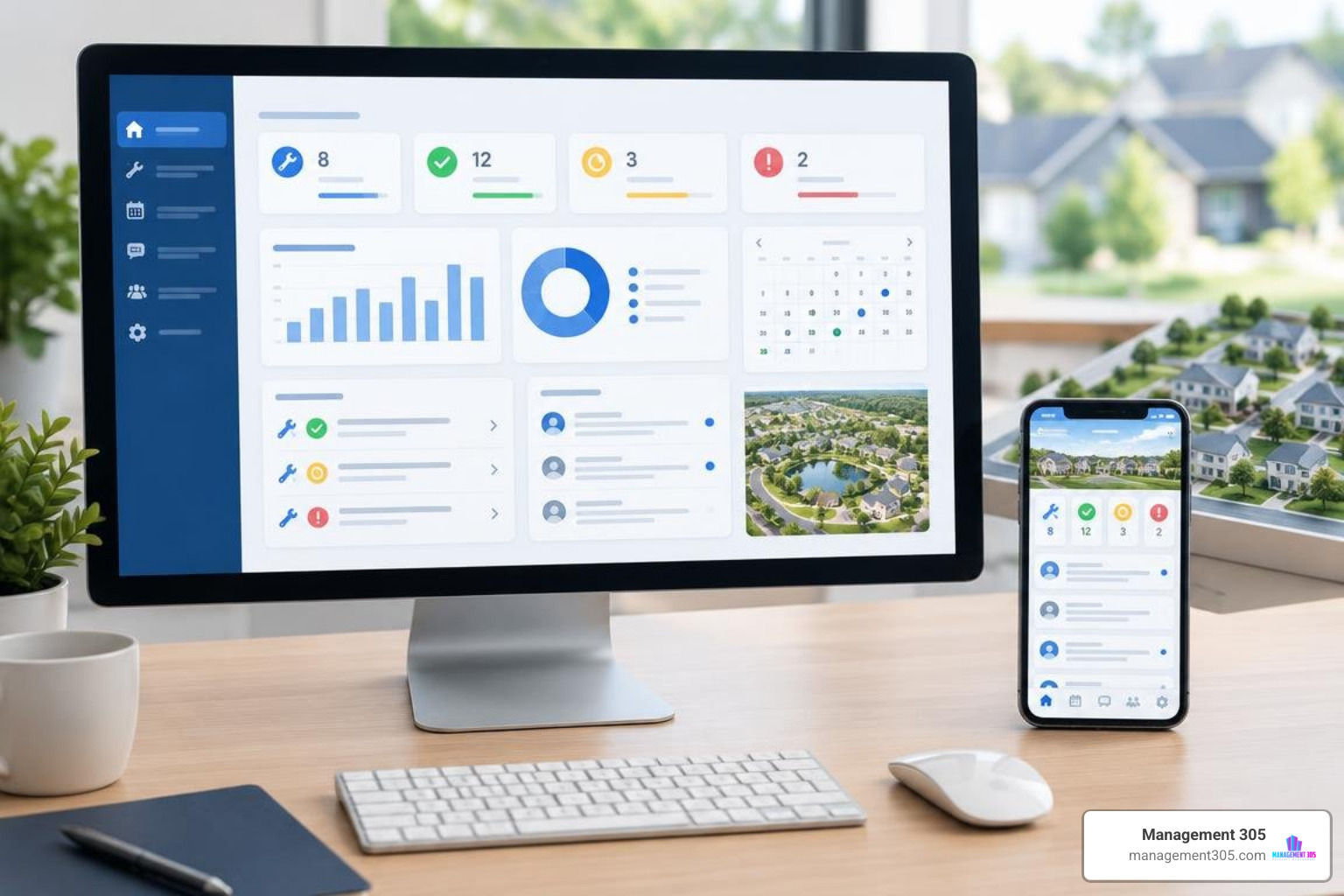
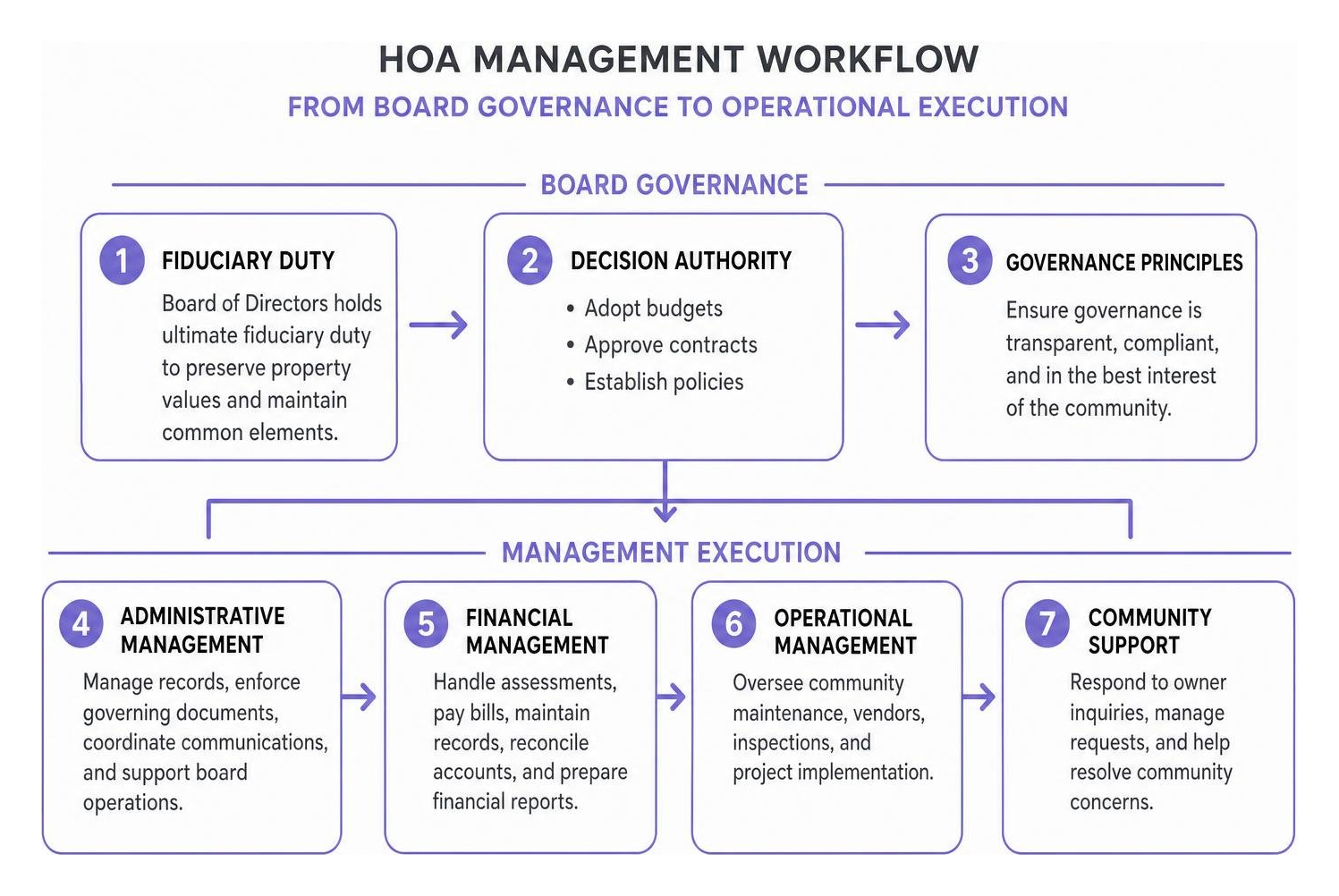
When residential communities search for professional homeowners association management near me, they are seeking a dedicated CAM partner to execute board decisions, manage daily vendor operations, provide homeowner portals, and oversee fiscal compliance. The board retains all decision-making authority—such as adopting budgets, approving contracts, and establishing policies—while the management company handles the administrative, financial, and operational work that keeps the community running smoothly.
A community association operates as a non-profit corporation where the elected board of directors holds the ultimate fiduciary duty to preserve property values and maintain common elements. However, volunteer directors are rarely trained property managers, accountants, or general contractors. This is where dedicated CAM community association management bridges the gap.
Professional managers act as the administrative, financial, and operational engine of the community, ensuring governance remains transparent, compliant, and stress-free for the volunteers leading the neighborhood.
What Professional Association Managers Handle Daily
Day-to-day community operations require constant oversight. On any given afternoon, a professional association manager might coordinate emergency irrigation repairs, review architectural modification requests, inspect common amenities, and reconcile monthly assessment payments.
Key daily management responsibilities include:
- Work Order Management: Receiving, dispatching, and tracking maintenance requests for common areas, landscaping, pools, and access gates.
- Vendor Oversight: Sourcing licensed contractors, bidding out major projects, and verifying insurance coverage before work begins.
- Architectural Review Support: Processing homeowner applications for exterior changes, ensuring submittals comply with community design guidelines before board review.
- Records Administration: Maintaining organized corporate records, meeting minutes, resident directories, and official association notices in compliance with statutory standards.
- Meeting Facilitation: Preparing board meeting packets, drafting agendas, sending statutory notices, and helping run orderly annual elections.
By handling these continuous tasks, professional management removes the daily administrative burden from board members' shoulders, allowing them to focus strictly on strategic leadership.
Essential Technology and Portals for Modern Communities
Gone are the days when community business was conducted via paper checks, lost emails, and chaotic phone calls at dinner time. Modern residential association management relies on centralized, cloud-based technology platforms that connect board members, residents, and management teams in real time.
A comprehensive community portal provides:
- Convenient Homeowner Portals: Residents can view their account ledger, set up recurring digital assessment payments via ACH or credit card, and submit service requests 24/7.
- Digital Architectural Submissions: Homeowners can upload paint swatches, contractor licenses, and project diagrams directly through the platform, tracking approval status in real time.
- Secure Board Dashboards: Directors gain on-demand access to unedited financial statements, open work orders, architectural queues, and delinquency reports from any device.
- Targeted Communication Channels: Management can broadcast instant SMS alerts, email newsletters, and critical community updates regarding routine maintenance or weather emergencies.
Centralized portals protect volunteer board members from burnout by eliminating after-hours personal phone calls and providing homeowners with self-service access to association documents.
Criteria for Selecting Homeowners Association Management Near Me
Selecting a management partner is one of the most significant decisions an association board will make. The right firm protects your neighborhood's financial health, enhances curb appeal, and fosters a peaceful living environment. When evaluating prospective firms in your immediate area, look beyond sales presentations to examine credentials, local vendor networks, and communication protocols.

Industry Certifications: CMCA, AMS, and PCAM
In the community association industry, professional designations from the Community Associations Institute (CAI) demonstrate that a management firm prioritizes rigorous training, ethical standards, and continuing education.
When interviewing management partners, look for these key credentials:
- Certified Manager of Community Associations (CMCA®): The foundational credential administered by the Community Association Managers International Certification Board (CAMICB). It verifies that a manager has mastered core operational, legal, and financial fundamentals.
- Association Management Specialist (AMS®): An intermediate designation awarded to managers with at least two years of verified field experience who have completed advanced coursework in association leadership, group dynamics, and financial management.
- Professional Community Association Manager (PCAM®): The pinnacle credential in the community association industry. Achieving the PCAM designation requires at least five years of direct, verified management experience, successful completion of the entire advanced curriculum, and submission of a rigorous, comprehensive case study analysis.
Firms with credentialed leadership bring seasoned, battle-tested problem-solving skills to your association's unique challenges.
Community Manager Certifications and Qualifications
| Credential | Awarding Body | Direct Experience Required | Educational Curriculum | Examination & Renewal Requirements |
|---|---|---|---|---|
| CMCA® | CAMICB | Comprehensive knowledge of association operations | The Essentials of Community Association Management (M-100) course | 2.5-hour national exam; ongoing continuing education (CE) |
| AMS® | CAI | 2+ years of verified direct management experience | At least two 200-level advanced management courses | Active CMCA status; strict adherence to CAI Professional Code of Ethics |
| PCAM® | CAI | 5+ years of direct, active community management | All six 200-level courses plus specialized electives | Comprehensive written case study; annual CE credits |
Local Vendor Networks in Homeowners Association Management Near Me
A management company's local relationships are just as critical as its software. Choosing an established, local residential partner ensures that your community has access to a deeply vetted network of licensed, bonded, and insured contractors.
Whether your neighborhood requires reliable landscaping, specialized pool filtration repairs, access-control maintenance, or urgent post-storm cleanup, local managers leverage established vendor volume to negotiate competitive pricing, prompt scheduling, and accountable service. When an emergency strikes, an established local team knows exactly who to call to get immediate, professional attention on-site.
Financial Governance, Reserve Planning, and Covenant Enforcement
Sound financial stewardship is the cornerstone of community longevity. An association's operating budget directly impacts every homeowner's investment, while its reserve funds protect against unexpected special assessments. A professional management company delivers structural financial precision, moving associations away from guesswork and into transparent, balanced fiscal health.
Boards rely on full-service residential property management practices to ensure every dollar collected is properly accounted for, safeguarded, and disbursed in accordance with strict corporate controls.
Reserve Studies, Banking Protocols, and Structural Planning
Reserve funds represent the community’s savings account for the inevitable repair and replacement of major common assets, such as roofs, roadways, clubhouse facilities, elevators, and perimeter walls.
A qualified management partner coordinates with licensed reserve specialists to conduct comprehensive reserve studies. These studies project asset deterioration over a 20- to 30-year horizon, calculating the precise monthly allocations needed to fully fund future capital replacements.
Best practices for association financial management include:
- Separation of Accounts: Operating and reserve funds must always be held in separate, distinct bank accounts at FDIC-insured institutions.
- Dual-Signature Protocols: Requiring designated board approval on all electronic transfers and checks over a specified threshold.
- Audit-Ready Ledgers: Maintaining pristine, standardized financial records that simplify annual CPA reviews, tax filings, and statutory disclosures.
CC&R Enforcement and Architectural Guidelines
Living in a deed-restricted community preserves property values because everyone agrees to uphold shared standards. However, enforcing Covenants, Conditions, and Restrictions (CC&Rs) is often the most stressful duty for volunteer board members, who frequently find themselves in awkward positions when correcting a neighbor.
Professional managers act as an objective, third-party buffer. We conduct regular, structured property inspections to identify maintenance issues, unapproved modifications, and rule infractions fairly and consistently across the entire neighborhood.
A professional covenant enforcement workflow follows strict due process:
- Friendly Notice: A polite, documented advisory letter alerting the homeowner to the issue (such as overgrown landscaping or unauthorized paint).
- Formal Notice of Violation: If unaddressed, a formal written notice citing the specific CC&R section and outlining the required cure period.
- Fining Committee & Hearings: If non-compliance persists, coordinating with the association's independent committee to schedule formal statutory hearings before any fines or suspensions are finalized.
By removing personal bias and following clear procedural guidelines, professional oversight resolves violations while keeping neighbor-to-neighbor relationships intact.
Switching Providers and Managing Contract Transitions
Many volunteer boards stay with unresponsive, disorganized management companies simply because they fear the transition process will be disruptive and painful. In reality, switching to a high-caliber management firm is an organized, structured process designed to relieve board stress from day one.

When partnering with a team that provides comprehensive management services, the incoming management group carries the operational weight of the transition, coordinating directly with the outgoing firm to transfer all files, data, and access credentials.
Warning Signs Your Board Needs a New Management Partner
If your community is experiencing any of the following operational breakdowns, it is time to evaluate your management options:
- Chronic Communication Delays: Emails and phone calls from board members or homeowners go unanswered for days or weeks.
- Inaccurate or Late Financials: Monthly financial packets arrive weeks behind schedule, contain unexplained ledger discrepancies, or lack reconciled bank statements.
- High Manager Turnover: Your community is passed between multiple assigned managers within a single year, leaving ongoing projects abandoned.
- Deferred Property Maintenance: Common area repairs languish for months, leading to deteriorating curb appeal and frustrated residents.
- Passive Leadership: The manager merely attends meetings to take notes rather than proactively advising the board on risk management, preventative maintenance, and evolving regulatory standards.
Questions to Ask When Interviewing Homeowners Association Management Near Me
When interviewing prospective management partners, ask pointed questions to understand their operational capacity and service culture:
- What is your manager-to-portfolio ratio? Ensure the assigned manager is not overstretched with a dozen other communities, which directly leads to neglected service.
- How are after-hours maintenance emergencies handled? Verify whether calls are routed to a live, qualified emergency response team or an impersonal, generic answering service.
- What technology tools do you provide for boards and homeowners? Confirm whether directors get real-time, 24/7 access to unedited financial ledgers and work order tracking.
- How do you handle vendor procurement and bidding? Ensure the firm gathers multiple competitive bids for major capital projects and maintains zero financial conflicts of interest with contractors.
- What is your onboarding process for new communities? A reliable firm should provide a detailed, step-by-step 60- to 90-day transition timeline covering data migration, banking setup, and homeowner welcome communications.
Choosing a partner that delivers a dedicated boutique management approach ensures your residential association receives tailored attention, modern digital transparency, and proactive operational oversight.
Frequently Asked Questions About Local HOA Management
How long does it take to transition between HOA management companies?
A typical, orderly transition between management providers takes between 60 to 90 days. This timeline aligns with the standard 30- to 90-day termination notice clauses found in most professional association contracts.
During this window, the incoming management team executes a structured onboarding checklist that includes:
- Transferring and auditing historical financial records, bank ledgers, and accounts payable histories.
- Migrating digital resident data and architectural records into the community's modern homeowner portal.
- Securing physical community assets, including gate access codes, clubhouse keys, common element warranties, and blueprints.
- Setting up new operating and reserve bank accounts with appropriate board signature authorities.
- Distributing comprehensive welcome packets with portal registration and automated assessment payment instructions to all homeowners.
What is the primary difference between an HOA board and an HOA management company?
The primary difference lies in the distinction between governance and execution:
- The HOA Board of Directors: Consists of elected community volunteers who hold fiduciary responsibility for the association. The board sets strategic policies, approves annual budgets, votes on vendor contracts, establishes community rules, and authorizes legal or collection actions.
- The HOA Management Company: Acts as the professional administrative contractor hired by the board. The management company does not create rules or make discretionary policy choices; instead, it executes the board's instructions, manages day-to-day operations, coordinates vendors, maintains corporate records, processes accounting, and advises the board on operational best practices.
How do professional management companies enforce delinquent dues collection?
Professional management companies follow a transparent, uniform, and legally compliant collection procedure established by the board and governing documents.
The standard collection workflow typically involves:
- Automated Reminders: Generating automated digital billing notices and courtesy payment reminders before due dates.
- Late Notices & Interest: Automatically applying board-approved late fees and statutory interest to past-due accounts after the established grace period.
- Formal Demand Letters: Issuing formal, legally compliant Intent-to-Lien and collection warning notices via certified mail within statutory timelines.
- Legal Coordination: If an account remains unpaid, management compiles the certified ledger and coordinates seamlessly with the association’s legal counsel to record an assessment lien or initiate foreclosure proceedings as authorized by the board.
Conclusion
A well-managed residential community protects home values, minimizes neighbor conflict, and gives volunteer board members their personal time back. If your association is struggling with delayed responses, messy accounting, or deferred maintenance, you do not have to settle for status-quo management.
At Management 305, our hands-on team combines modern, real-time portal technology with personalized, boutique-style oversight tailored specifically to residential communities across South Florida—including Aventura, Sunny Isles Beach, Hollywood, Dania Beach, North Miami Beach, Miami, and Fort Lauderdale.
Discover how easy community governance can be when you have the right local partner by your side. Contact our team today to schedule a consultation and receive a customized management proposal for your neighborhood.
