
How to Screen Tenants Without Guesswork

To run a credit and criminal background check, get the applicant's written consent, then use a tenant-screening service that handles sensitive information securely. Review the credit and criminal reports alongside verified income and rental history. Apply the same lawful criteria to every applicant, check the context of any criminal record, and send a required adverse-action notice if a report affects your decision.
I'm Liraz Rose, a contributor to Management 305 with a background in HR leadership and building consistent review processes. That experience shapes my approach to a credit and criminal background check for landlords: make the process clear, fair, and easy to document.
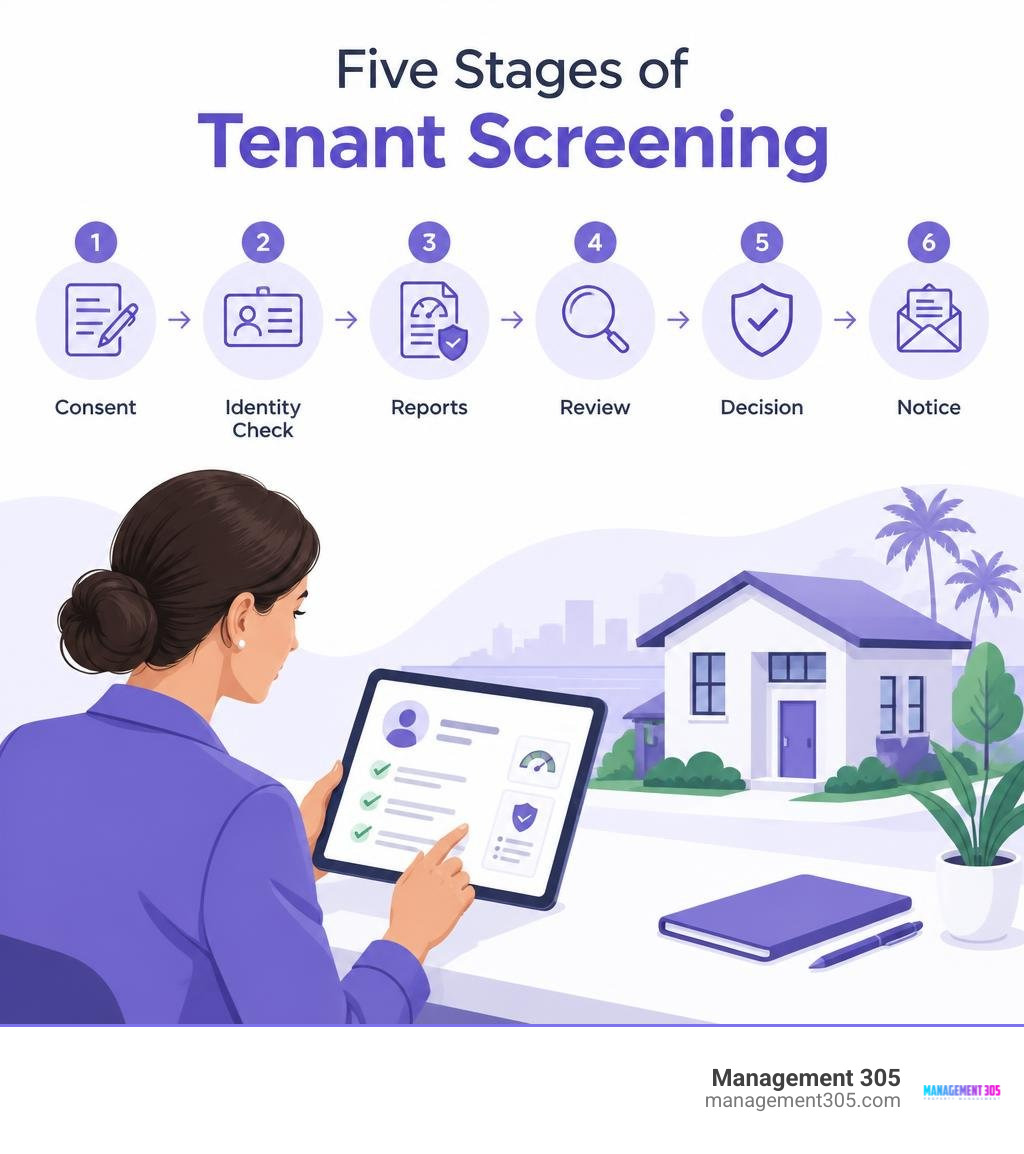
Why Comprehensive Screening Matters for Modern Rental Properties
Managing rental investments in high-demand markets across South Florida—from bustling neighborhoods in Miami and North Miami Beach to coastal communities in Sunny Isles Beach, Aventura, Dania Beach, and Hollywood—requires a solid vetting framework. When screening is treated as an afterthought, property owners expose themselves to significant operational vulnerabilities. Vacancies hurt, but placing the wrong resident can trigger thousands of dollars in lost rent, legal fees, and property damage.
Comprehensive screening protects your monthly cash flow, reduces bad debt, and creates a secure environment for neighboring residents. Relying on gut feelings or a quick glance at an outdated bank statement leaves landlords vulnerable to sophisticated application fraud. Today's digital application landscape makes it easy for dishonest applicants to alter PDF pay stubs or supply invalid Social Security numbers.
A rigorous vetting process filters out fraudulent submissions before a lease agreement is ever drawn up.

| Screening Dimension | Basic Single-Bureau Credit Pull | Multi-Layer Background & Fraud Verification |
|---|---|---|
| Credit Evaluation | Surface-level credit score only | Full trade-line review, collections, payment history, and public records |
| Identity Verification | Name match against credit file | Multi-layer ID verification, SSN validation, and biometric liveness detection |
| Income Assessment | Unverified PDF pay stubs | Direct payroll connections, automated bank data extraction, and rent-to-income calculations |
| Criminal History | Single-state or regional search | National criminal database, county-level court searches, sex offender registries, and global watchlists |
| Eviction History | Often omitted | Multi-jurisdiction civil judgment and court record retrieval |
| Legal Defensibility | Basic pass/fail record | Standardized scoring, logged timestamps, and automated adverse-action documentation |
Evaluating Financial Stability: The Credit and Criminal Background Check for Landlords Component
Evaluating financial standing goes beyond pulling a basic credit score. A strong three-digit score is a helpful snapshot, but the underlying trade lines reveal an applicant's real financial habits. When evaluating reports across our rental portfolios in Fort Lauderdale and surrounding areas, we examine payment histories, open lines of revolving debt, past-due collections, and active bankruptcies.
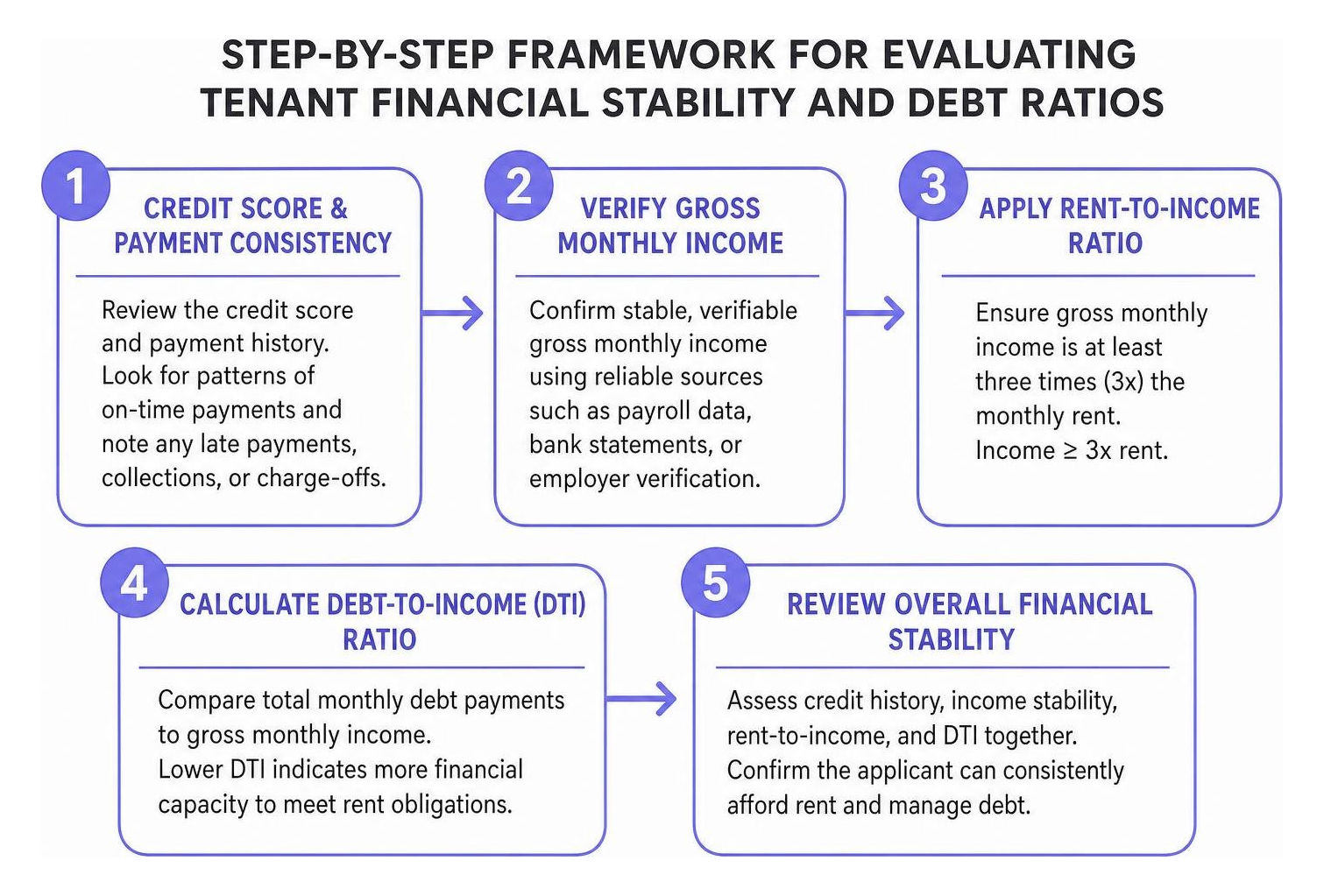
A comprehensive review involves several key financial metrics:
- Credit Score and Payment Consistency: Look for patterns. A minor late payment from four years ago is very different from multiple charge-offs within the past twelve months.
- Rent-to-Income Ratio: A standard industry benchmark requires the applicant's gross monthly income to equal at least three times (3x) the monthly rent. If rent is $2,500, verified monthly income should be at least $7,500.
- Debt-to-Income (DTI) Balance: High student loans, auto financing, or massive credit card balances can strain a tenant's budget, even if their base salary meets your initial threshold.
- Automated Income and Employment Verification: Avoid accepting emailed copies of pay stubs without independent confirmation. Use modern verification tools that connect directly to payroll databases or bank accounts to confirm continuous, stable employment.
Understanding Criminal Records, Lookback Limits, and Public Safety
Public safety and community protection are top priorities for property managers and owners alike. Performing criminal history evaluations helps you protect your physical asset, on-site personnel, and adjacent neighbors. However, evaluating criminal records requires a balanced, lawful, and standardized approach.
A complete criminal review checks several tiers of public data:
- County Court Records: Searches direct court filings in the jurisdictions where the applicant has lived or worked.
- National Criminal Databases: Scans nationwide repository records across thousands of jurisdictions.
- Sex Offender Registries: Checks federal and state registries nationwide.
- Global Security Watchlists: Screens against international terror registries, OFAC sanctions, and federal most-wanted listings.
When evaluating criminal backgrounds, reporting agencies follow strict lookback limits. Under federal standards, non-conviction arrest records generally cannot be reported past seven years. Landlords must also stay current on evolving statutory trends across different jurisdictions—such as the explicit lookback limitations defined in statutes like C.R.S. Section 38-12-904—which emphasize evaluating recent, relevant convictions rather than holding decades-old infractions against prospective applicants.
How to Run a Compliant Credit and Criminal Background Check for Landlords
Running a compliant background check requires a structured workflow. Managing sensitive consumer data manually increases liability risks and opens your business to privacy breaches.

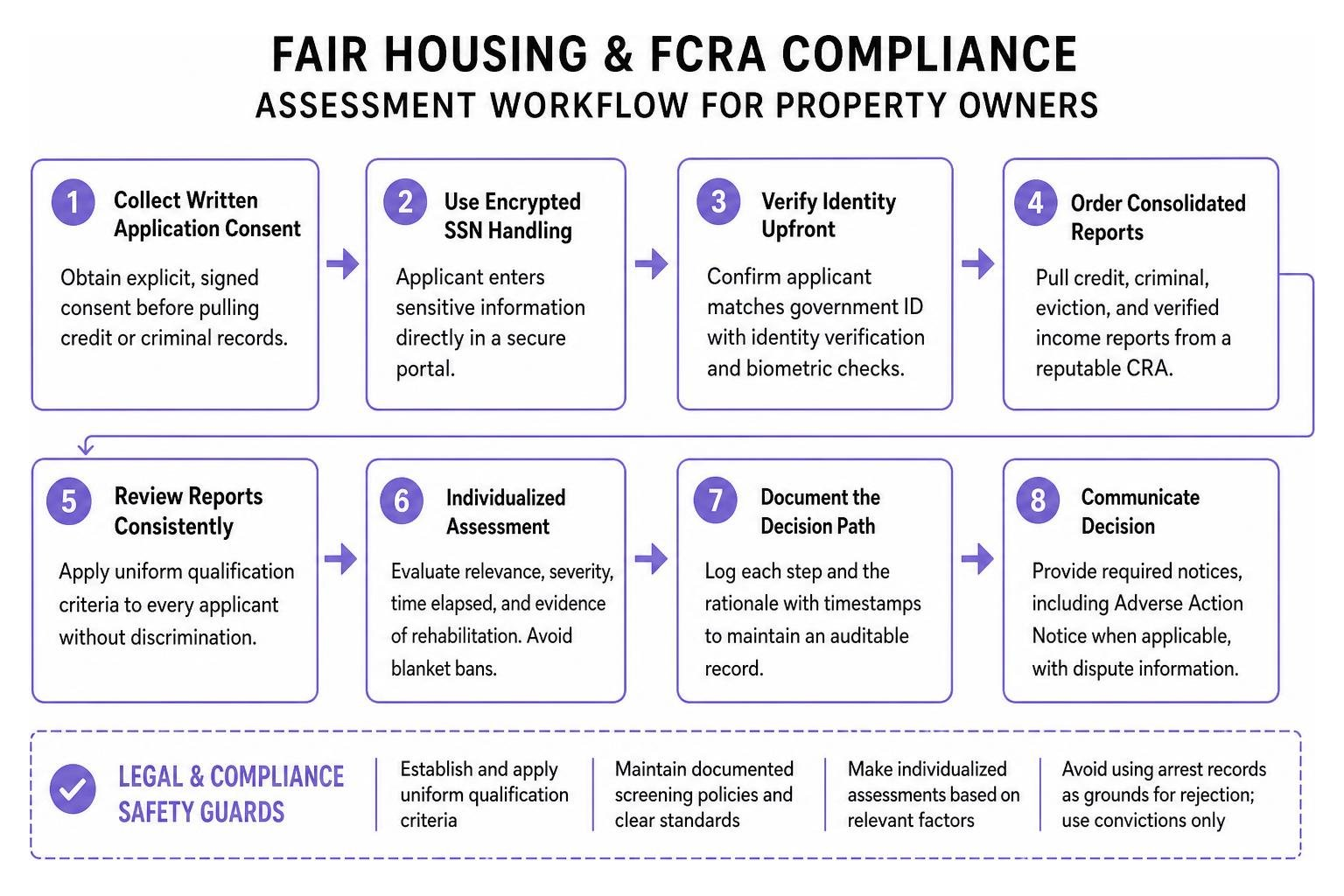
To build a professional intake and vetting workflow, follow these operational steps:
- Collect Written Application Consent: Under federal consumer protection guidelines, you cannot pull credit files or criminal records without the explicit, signed consent of the applicant. Digital application portals should require clear consent checkboxes before proceeding.
- Use Encrypted SSN Handling: Never accept Social Security numbers over unencrypted email, text messages, or physical paper forms left on a desk. Modern screening engines allow the applicant to input their sensitive identification numbers directly into a secure portal.
- Verify Identity Upfront: Confirm that the person filling out the application matches the government ID provided. Multi-layer identity validation and biometric liveness checks help prevent stolen identities and synthetic credit profiles from passing your screening filters.
- Order Consolidated Reports: Pull credit, criminal, eviction, and verified income reports through a reputable consumer reporting agency that adheres strictly to credit reporting standards.
- Document the Decision Path: Log every step of the decision-making process with timestamps, preserving an auditable paper trail.
Legal Compliance in Every Credit and Criminal Background Check for Landlords
Legal compliance must be woven directly into every step of your screening system. Navigating tenant vetting requires complete alignment with the Fair Credit Reporting Act (FCRA), the Fair Housing Act, and localized non-discrimination ordinances.
To prevent claims of disparate impact or discriminatory practices, keep these compliance safeguards in place:
- Establish Uniform Qualification Criteria: Write down your minimum requirements—such as a minimum credit score, verifiable 3x income ratio, and clear eviction history—before listing the property. Apply these standards identically to every applicant.
- Maintain Documented Policies: Keep your leasing standards clearly outlined within your published screening policies to ensure full transparency and compliance across your entire team.
- Perform Individualized Assessments: The U.S. Department of Housing and Urban Development (HUD) advises against blanket bans on applicants with criminal histories. Instead, conduct an individualized assessment that takes into account the nature and severity of the crime, how much time has passed since conviction, and evidence of subsequent rehabilitation.
- Avoid Using Arrest Records as Grounds for Rejection: An arrest does not prove unlawful conduct. Decisions should always be grounded in formal convictions that demonstrate a direct risk to resident safety or property integrity.
Handling Denial Notices and Dispute Procedures
When a consumer report plays any part in an unfavorable leasing decision—whether you decline the application, require a co-signer, or increase the security deposit—you are legally obligated under the FCRA to issue a formal Adverse Action Notice.
A compliant adverse action procedure must include:
- Timely Written Notification: Send the notice promptly after making your leasing decision.
- Consumer Reporting Agency Details: Provide the name, address, and toll-free telephone number of the screening bureau that supplied the report.
- Disclosure of Rights: Inform the applicant that the reporting agency did not make the final leasing decision and cannot explain why the application was declined.
- Free Report and Dispute Instructions: Include clear language informing the applicant of their legal right to obtain a free copy of their consumer file within 60 days and their right to dispute inaccurate or incomplete information directly with the bureau.
Frequently Asked Questions About Tenant Screening
How far back does a tenant background check go?
Under federal FCRA guidelines, credit reporting agencies generally limit negative non-conviction credit and civil entries—such as collections, paid tax liens, and civil judgments—to a seven-year lookback window. Bankruptcies can remain visible for up to ten years.
For criminal records, non-conviction arrest records cannot appear on consumer reports past seven years. While felony convictions can legally appear indefinitely under federal rules unless sealed or expunged, best practices and state statutory frameworks increasingly focus on records from the past five to seven years to ensure fair housing compliance.
Can a landlord reject an applicant solely based on criminal history?
A landlord cannot implement a blanket ban that rejects anyone with any type of criminal past. Under HUD's Fair Housing guidance, blanket bans create an unlawful disparate impact on protected groups.
Landlords can, however, deny an applicant if a recent conviction indicates a direct, demonstrable threat to the safety of other residents or the property. Evaluating the severity, context, and recency of the offense through an individualized assessment ensures compliance while keeping your property secure.
Who typically pays for credit and background checks?
In most rental transactions, the prospective tenant pays the application screening fee directly through the online application portal when submitting their information. These fees cover the hard costs of pulling credit files, multi-jurisdiction criminal searches, and automated verification tools.
Landlords can choose to absorb these costs as a marketing incentive, but passing the fee directly to the applicant remains standard across modern residential leasing.
Conclusion
Securing dependable, long-term residents starts with a consistent, data-backed screening process. By pairing credit analysis and income verification with lawful, individualized criminal history reviews, property owners safeguard their rental income and create safe, thriving rental communities.
Self-managing these complex screening workflows, staying updated on federal guidelines, and handling tenant communications can quickly overwhelm independent owners. Partnering with a dedicated property team simplifies the entire process. Management 305 provides full-service residential and multi-unit management across South Florida, pairing real-time owner portals with boutique, personalized care. Explore our comprehensive suite of residential property management services to protect your real estate investments with seamless, professional screening solutions.
