
The Ultimate Guide to Choosing the Right Building Management Company
Choose a Building Management Partner That Protects Your Time and Asset

The right building management companies handle the daily work of owning a property: leasing, resident communication, rent collection, maintenance, vendor coordination, financial reporting, and legal compliance. To choose well, look for a partner with clear fees, fast maintenance response, strong occupancy performance, easy-to-use real-time reporting, and experience with properties like yours.
For busy owners, the goal is simple: fewer vacancies, fewer surprise repair bills, and a clear view of what is happening at the property without chasing updates. Leading multifamily managers averaged 93.6% occupancy in 2025, according to the National Apartment Association, showing why proactive leasing, resident service, and prompt maintenance matter.
Modern management also goes beyond collecting rent. Cloud platforms, resident portals, digital work orders, and data from building systems can help teams spot issues earlier, communicate faster, and make better decisions about repairs and operating costs.
I am Liraz Rose, a contributor at Management 305 with an HR and operations background focused on building strong teams and transparent systems for building management companies. In this guide, I will explain what to expect from a management partner and how to compare your options with confidence.
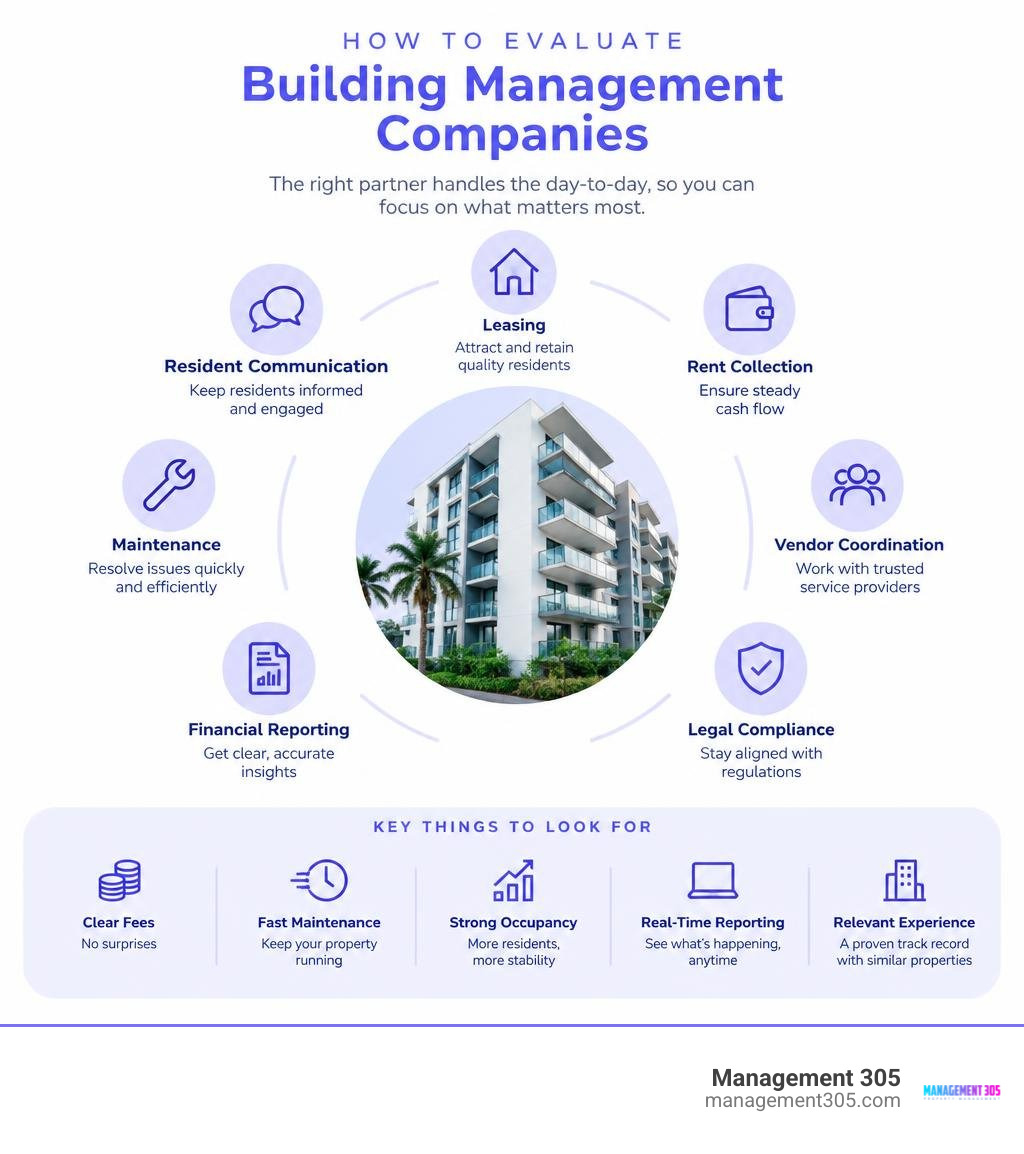
Core Services Delivered by Leading Building Management Companies
Managing residential buildings across South Florida—whether in Miami, Sunny Isles Beach, Aventura, Hollywood, Dania Beach, North Miami Beach, or Fort Lauderdale—requires a delicate balance between high-touch resident care and rigorous operational control. Professional management firms shoulder the entire lifecycle of property operations so property owners do not have to handle late-night calls or complex vendor negotiations.
At its foundation, full-service building management covers several interconnected pillars:
- Tenant Relations and Resident Retention: Fostering community satisfaction through transparent communication, clear community guidelines, and swift conflict resolution.
- Leasing and Marketing: Marketing vacancies across leading digital channels, conducting background checks, managing digital leases, and minimizing turnover times.
- Rent Collection and Accounts Receivable: Enforcing lease terms, automating recurring online payments, and managing delinquency proactively.
- Community Association Management (CAM): Assisting condominium and HOA boards with meeting coordination, rule enforcement, budget preparation, and statutory reserve oversight.
- Capital Planning and Asset Preservation: Developing multi-year reserve studies, life-safety updates, and exterior envelope maintenance schedules to safeguard long-term property value.
How Building Management Companies Handle Operations and Maintenance
Physical asset preservation is where a property manager truly proves their value. Unresolved maintenance issues lead to dissatisfied residents, higher turnover, and costly structural damage over time.

Top-tier building management firms implement proactive maintenance protocols rather than simply reacting when things break down. Mechanical, Electrical, and Plumbing (MEP) systems require routine seasonal tune-ups, filter replacements, and regular testing.
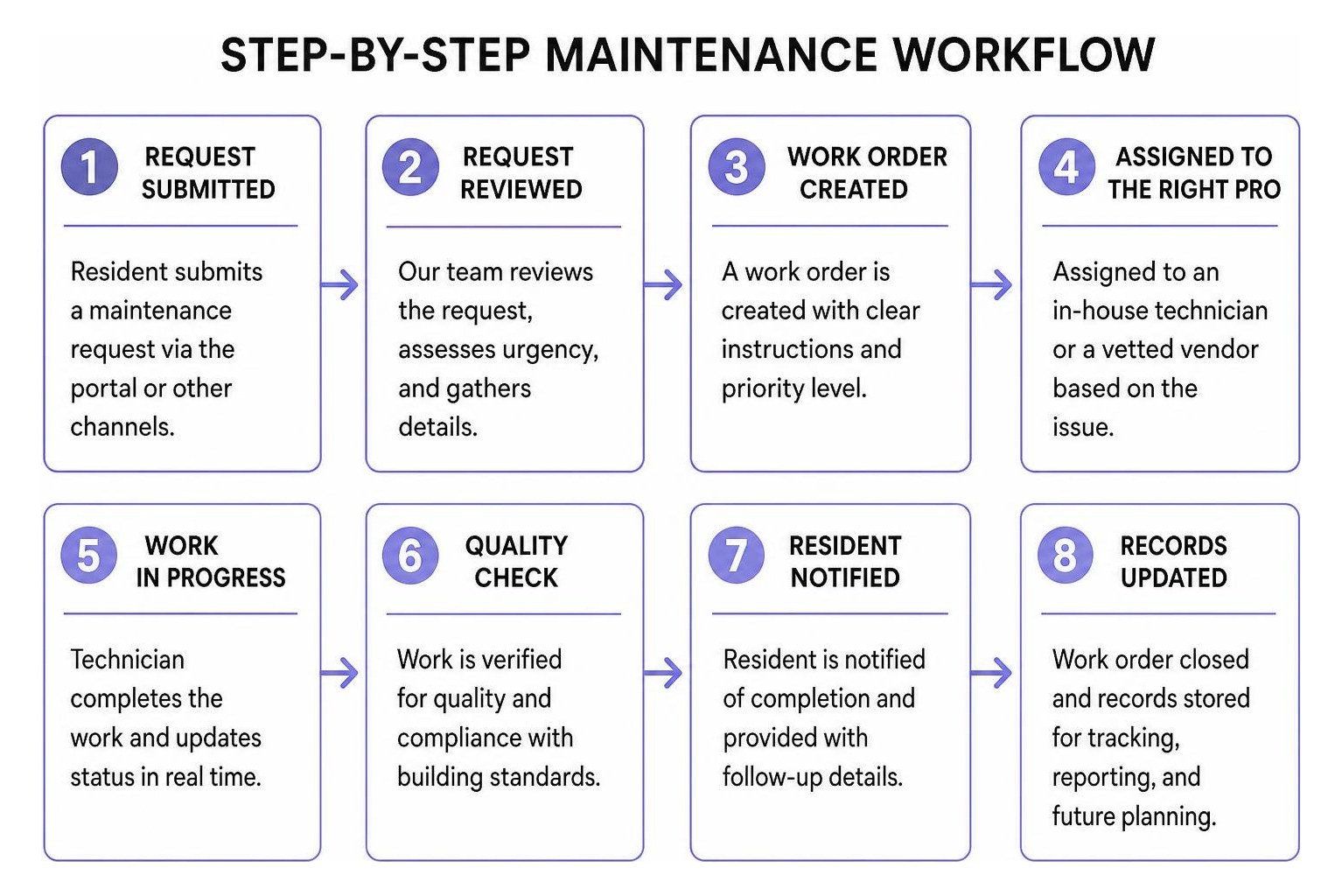
When urgent situations arise—such as a burst pipe or an air-conditioning failure during a humid South Florida summer—having a dedicated 24/7 emergency dispatch protocol makes all the difference. Leading managers partner with licensed, vetted contractors while maintaining dedicated in-house technical personnel to triage work orders swiftly.
Financial Administration and Hybrid Pricing Models
A management partner must provide clear, auditable accounting so property owners can evaluate net operating income (NOI) at a glance. Standard industry pricing generally falls into three categories:
- Percentage of Rent Collected: Typically ranges between 8% and 12% of gross monthly rental income. This aligns the manager’s incentives with the owner's revenue goals.
- Flat-Fee Structure: A fixed monthly management fee regardless of rent collected, offering predictable costs for larger residential buildings or luxury assets.
- Hybrid Pricing Models: A balanced structure combining a baseline flat administrative fee with a lower percentage fee for specialized leasing or capital project oversight.
Transparent financial reporting should include monthly income statements, balance sheets, general ledgers, and bank reconciliations delivered via secure online portals.
Key Technology and Sustainability Trends in 2026
The property management landscape in 2026 is driven by technological integration and actionable sustainability. The global property management software market, valued at USD 5.51 billion in 2023, is projected to reach approximately USD 9.68 billion by 2030. This growth reflects how essential digital tools have become for day-to-day operations.
Modern operations leverage Internet of Things (IoT) sensors to detect moisture leaks behind drywall, track sub-metered water usage, and monitor HVAC compressor performance in real time. Rather than waiting for a tenant to report a malfunction, managers receive automated alerts, dispatching technicians before catastrophic failures occur.
The Impact of AI and PropTech on Asset Performance
Artificial intelligence has evolved from an experimental concept into an everyday operational tool. Today’s leading firms use AI-driven tools to:
- Optimize Dynamic Rental Rates: Analyze local supply, seasonal demand fluctuations, and neighborhood absorption rates to price units competitively without sacrificing yield.
- Streamline Digital Work Orders: Automatically categorize tenant maintenance requests, assign priority tags, and route tickets to the appropriate vendor.
- Enhance Owner and Resident Portals: Provide on-demand access to lease records, financial statements, and real-time project tracking.
These PropTech advancements eliminate administrative bottlenecks and provide property owners with complete operational visibility.
ESG Initiatives and Energy Efficiency Standards
Environmental, Social, and Governance (ESG) standards have transitioned from corporate buzzwords into practical operational necessities that directly impact the bottom line.

Modern building management strategies incorporate measurable decarbonization and energy conservation methods:
- HVAC and Lighting Optimization: Installing smart programmable thermostats, variable-frequency drives (VFDs), and smart LED lighting controls to cut common-area electrical loads.
- Emissions Tracking: Monitoring Scope 1 (direct emissions from on-site equipment), Scope 2 (indirect emissions from purchased electricity), and Scope 3 (supply chain and resident usage) to meet long-term net-zero carbon targets.
- Water Conservation: Installing low-flow fixtures and smart irrigation systems tied to local weather forecasts.
- Occupant Wellness: Implementing air-filtration upgrades and non-toxic cleaning protocols to enhance indoor environmental quality.
How to Evaluate and Select the Best Management Partner
Choosing the right firm requires analyzing operational capabilities, communication practices, and track records across similar properties.
Across the industry, the benchmark occupancy rate among ranked multifamily firms stood at 93.6% in 2025 (up from 93.5% in 2024). A quality management partner should consistently meet or outperform this baseline by utilizing proactive marketing and high-touch resident support.
| Evaluation Factor | Boutique Management Partner | Large National Corporate Model |
|---|---|---|
| Communication & Accessibility | Direct access to dedicated managers and leadership | Call centers, ticketing queues, and rotating account reps |
| Local Market Expertise | Hyper-local knowledge of South Florida neighborhoods and codes | Regional guidelines that may overlook municipal nuances |
| Customization | Tailored maintenance plans, custom reporting, flexible SLAs | Rigid, standardized service packages |
| Technology Integration | Modern, user-friendly real-time portals | Proprietary legacy software systems |
| On-Site Oversight | Regular physical inspections and personalized vendor coordination | High unit-to-staff ratios with less frequent on-site presence |
Credentials and Designations of Top Building Management Companies
A reputable building management company must hold valid state real estate broker licenses and community association manager (CAM) licenses where required by law.
In addition to state compliance, leading professionals pursue industry-recognized accreditations through organizations such as the Institute of Real Estate Management (IREM), the National Association of Residential Property Managers (NARPM), and the National Apartment Association (NAA). To see how these principles guide our day-to-day operations, read about our dedicated property management standards.
Resident Retention and Lease Concession Strategies
High tenant turnover is one of the biggest drains on net operating income. Leading property management teams focus heavily on tenant retention programs to keep renewal rates high.
When competing in active rental markets, managers often deploy strategic lease concessions to attract and retain quality residents:
- Targeted Free Rent: Offering a one-month free rent concession on longer lease commitments to stabilize occupancy quickly.
- Application and Administrative Fee Waivers: Lowering initial move-in friction for well-qualified applicants.
- Community Engagement: Organizing building events, maintaining pristine common spaces, and quickly acknowledging tenant milestones.
- Rapid Maintenance Resolution: Ensuring standard repairs are acknowledged within hours and resolved within 24 to 48 hours.
Frequently Asked Questions About Building Management
What are the standard fees charged by building management firms?
Standard residential management fees typically range from 8% to 12% of monthly collected rent for percentage-based arrangements. Alternatively, flat-fee structures charge a fixed monthly rate per unit. Additional costs may include one-time leasing fees for tenant placement, lease renewal fees, or project oversight fees for major capital renovations.
How do property managers maintain high occupancy rates in 2026?
Property managers achieve high occupancy by combining dynamic pricing algorithms, virtual 3D tours, syndication across high-traffic rental portals, and proactive renewal outreach beginning 60 to 90 days before lease expiration. Swift make-ready workflows ensure vacant units are repainted, cleaned, and re-listed within days of move-out.
What is the difference between facility management and property management?
Property management focuses on the overall operational, financial, and tenant lifecycle of a building—handling leasing, rent collection, resident relations, budgeting, and legal compliance. Facility management is a specialized discipline centered on the physical infrastructure, space planning, MEP systems, and routine building maintenance. Comprehensive building management partners integrate both services under one umbrella.
Conclusion
Selecting the right building management partner is one of the most critical decisions a property owner or condominium board can make. The ideal partner protects your time, controls operating expenses, maintains high resident satisfaction, and safeguards long-term asset appreciation.
At Management 305, we provide full-service residential, multi-unit, and community association management across South Florida—including Miami, Sunny Isles Beach, Aventura, Hollywood, Dania Beach, North Miami Beach, and Fort Lauderdale. We combine an integrated real-time portal with hands-on, boutique-style service to ensure complete transparency and proactive care for your properties.
Discover our comprehensive property management services or contact our team today to discuss how we can tailor our management solutions to your building's unique needs.